PolyShell

Søren Jensen's team built PolyShell from flat recycled sheets. Before this studio was founded, Timo Harboe developed the computational workflow that turned its curved form into fabrication-ready cutting patterns.

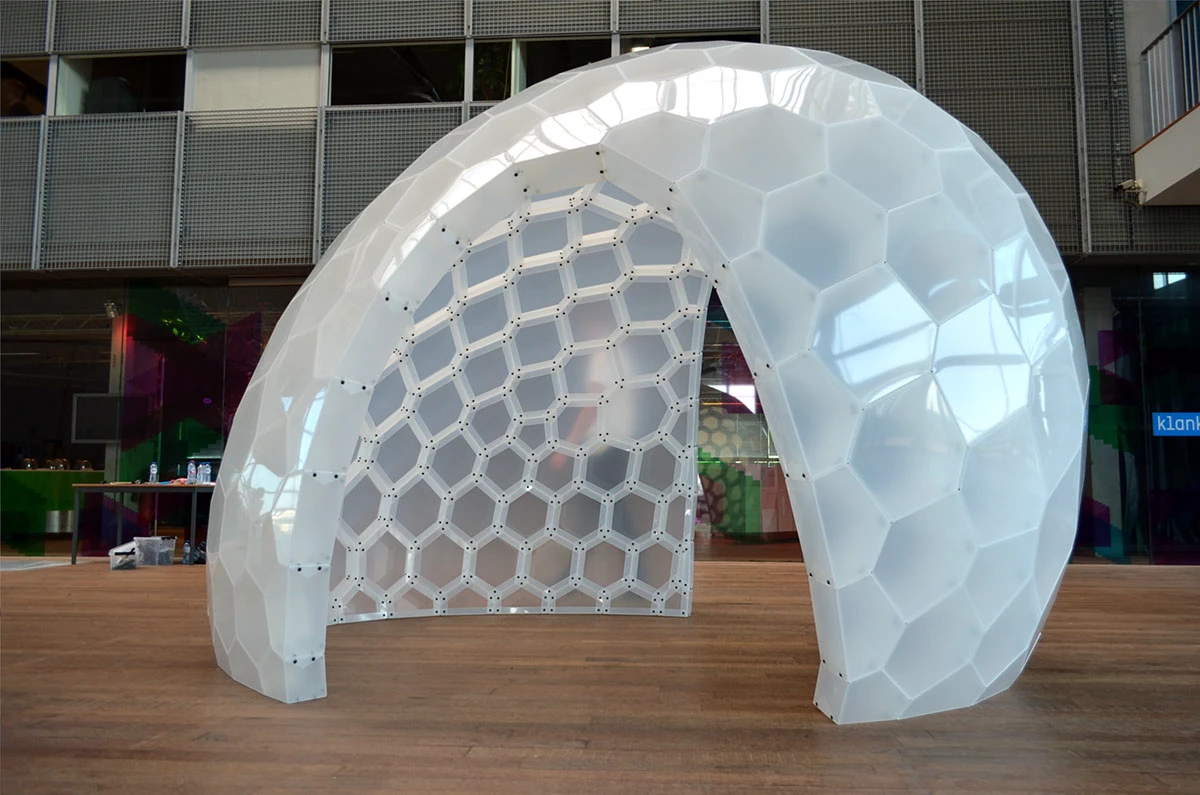
White PolyShell pavilion installed inside the Muziekgebouw in Amsterdam.

The Work

The Pavilion

PolyShell explored how very thin sheets could enclose a large space. The curved pavilion had two entrances and was designed to fit within a 4 × 4 × 4 m exhibition space at IASS 2015 in Amsterdam.

Its panels were made from 100% recycled polypropylene sheets, scored for folding and joined with plastic pop rivets.

Computational Design

A single Grasshopper model turned the pavilion’s curved surface into cutting patterns for each folded panel. It started with a triangular mesh, which was used to create a mostly hexagonal pattern. Two layers of this pattern, spaced apart and connected along their edges, formed box-shaped modules.

The inner and outer faces and the connecting sides were adjusted together so every face was flat and could be cut from a sheet. Structural analysis guided the depth of the modules where forces were highest.

The process is documented in the 2015 IASS paper Computational design of a temporary lightweight shell with minimal thickness.
View original project on Behance View Søren Jensen project page

Gallery

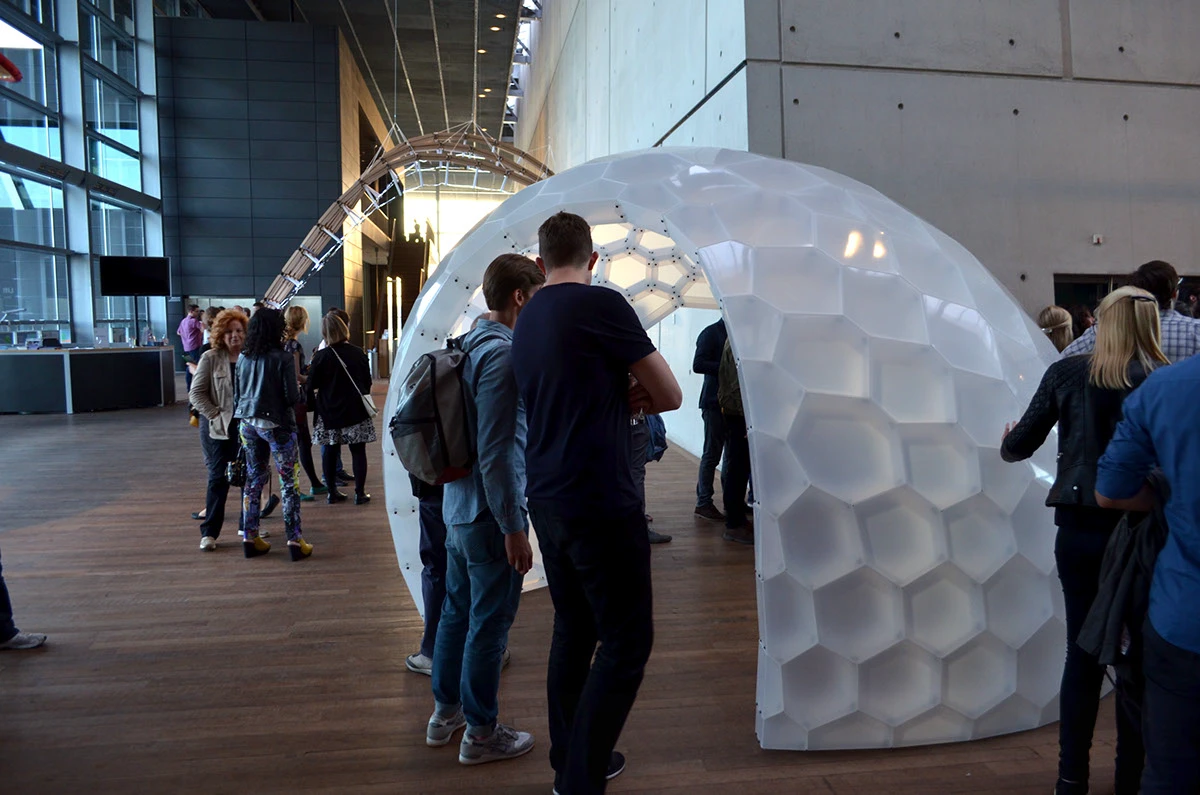
Visitors exploring the PolyShell pavilion at the IASS exhibition.
Visitors explore PolyShell at IASS 2015 in Amsterdam.
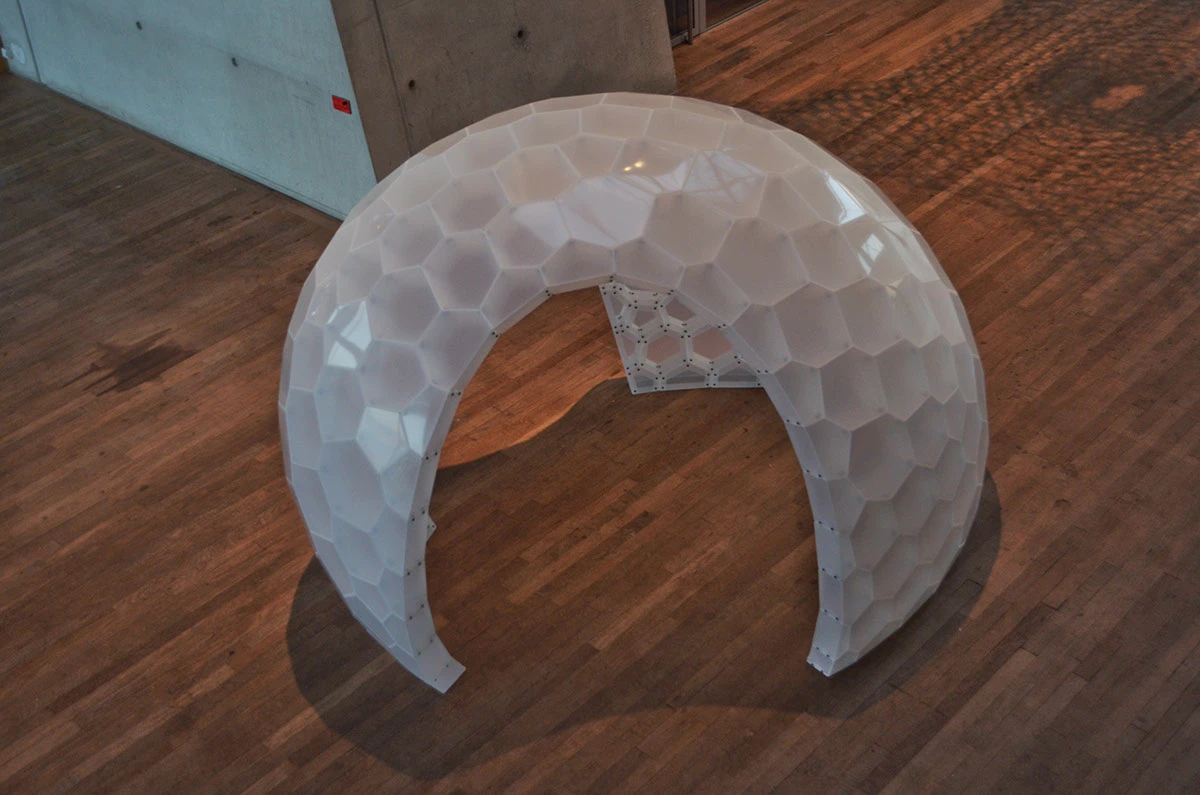
Overhead view of the curved PolyShell pavilion.
The pavilion's curved form, seen from above.
Five diagrams showing the curved surface becoming a planar hexagonal mesh.
The digital surface becomes a pattern of flat panels. IASS 2015 paper.
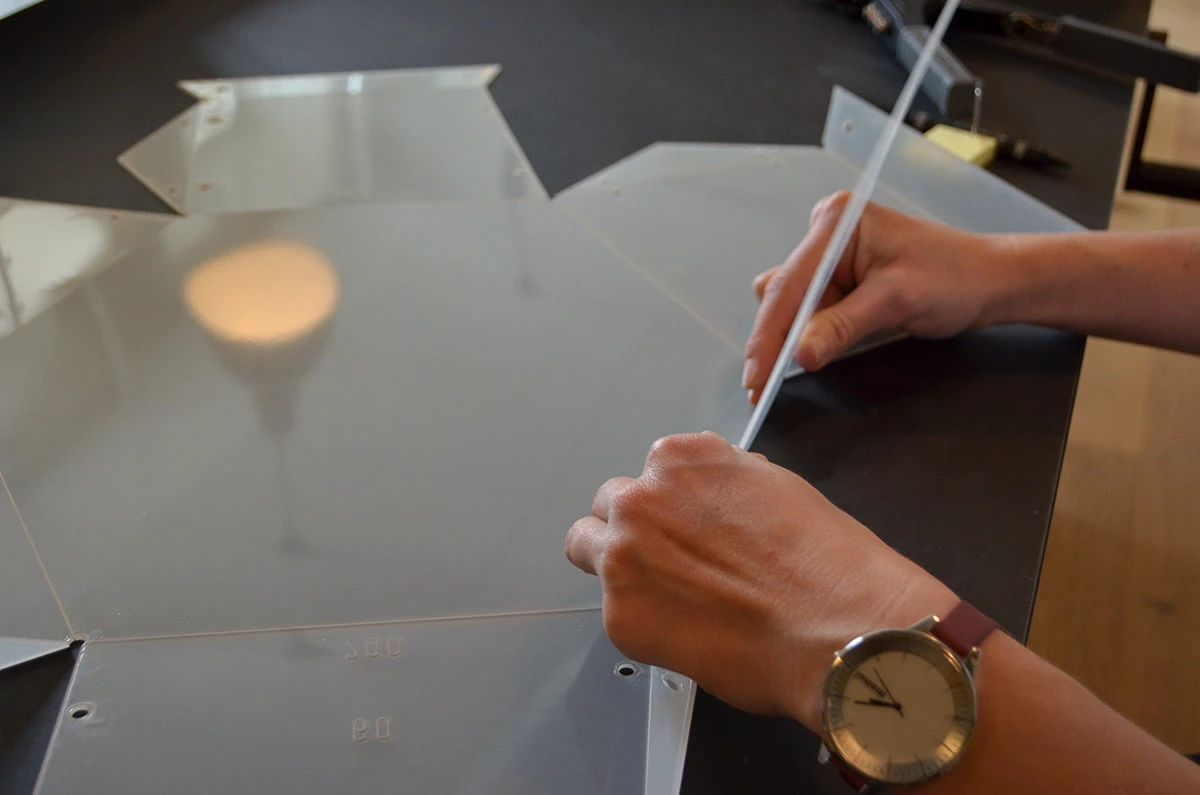
Hands folding a scored polypropylene sheet during fabrication.
Scored sheets fold into the designed panel shape.
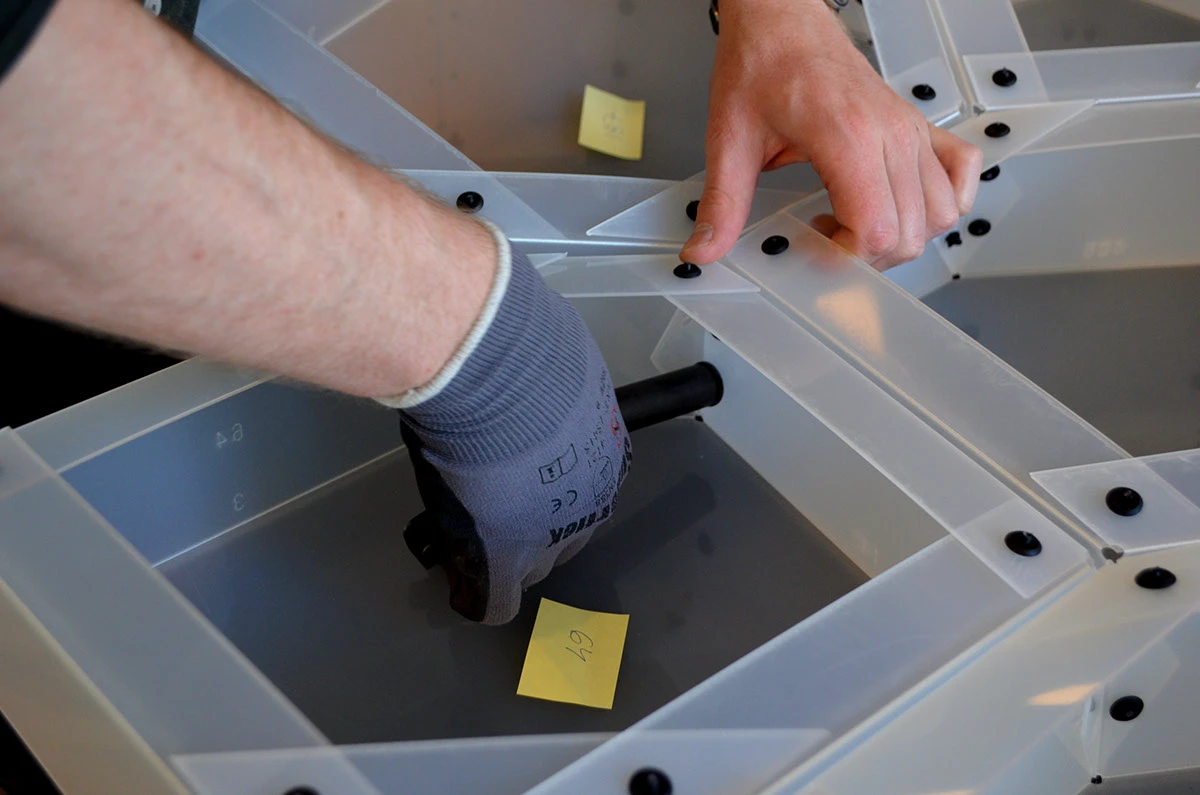
Close-up of plastic rivets being fitted to PolyShell modules.
Simple plastic rivets connect the modules.
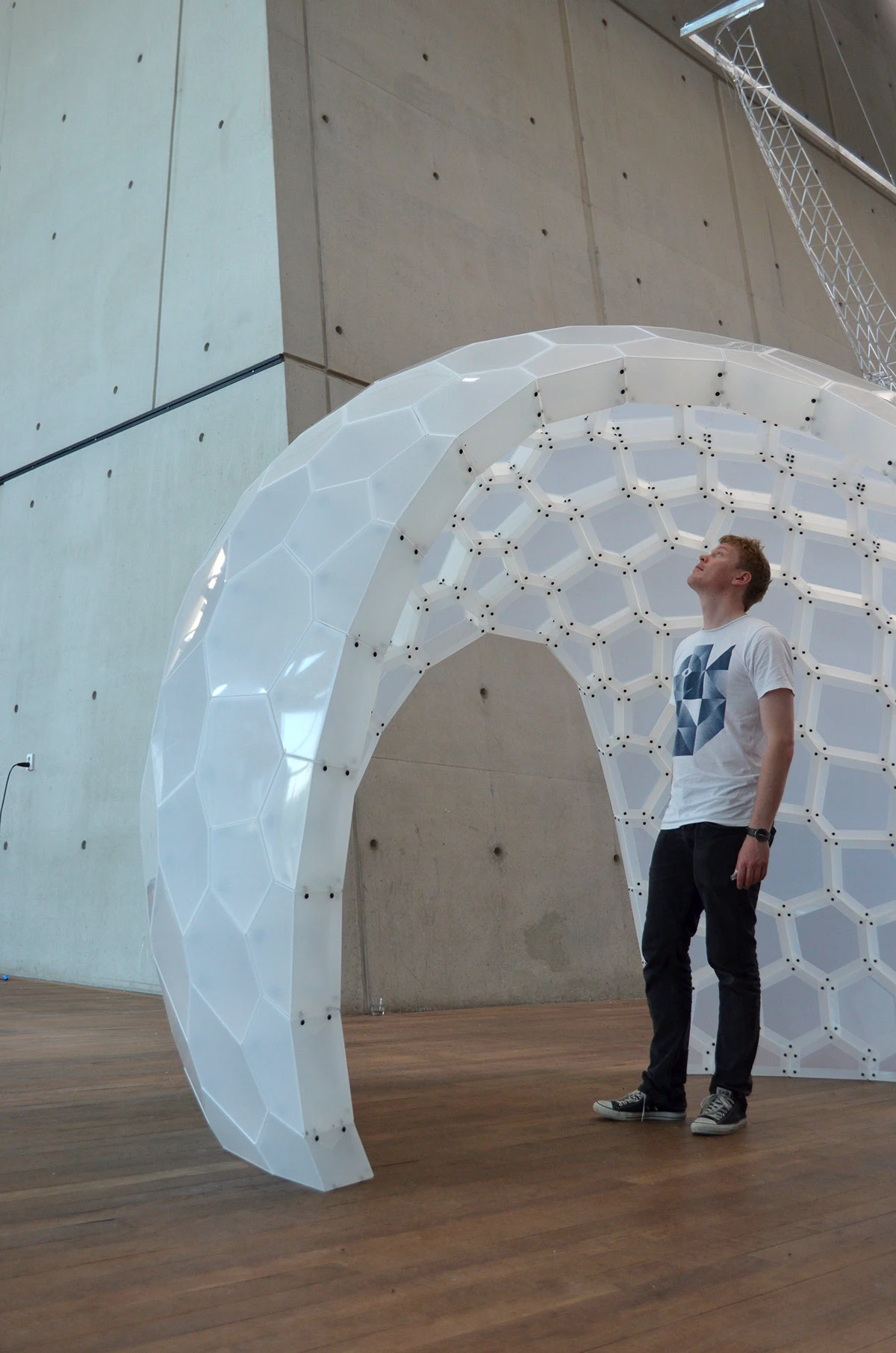
A person standing beneath PolyShell, showing the pavilion's scale.
The finished pavilion at human scale.
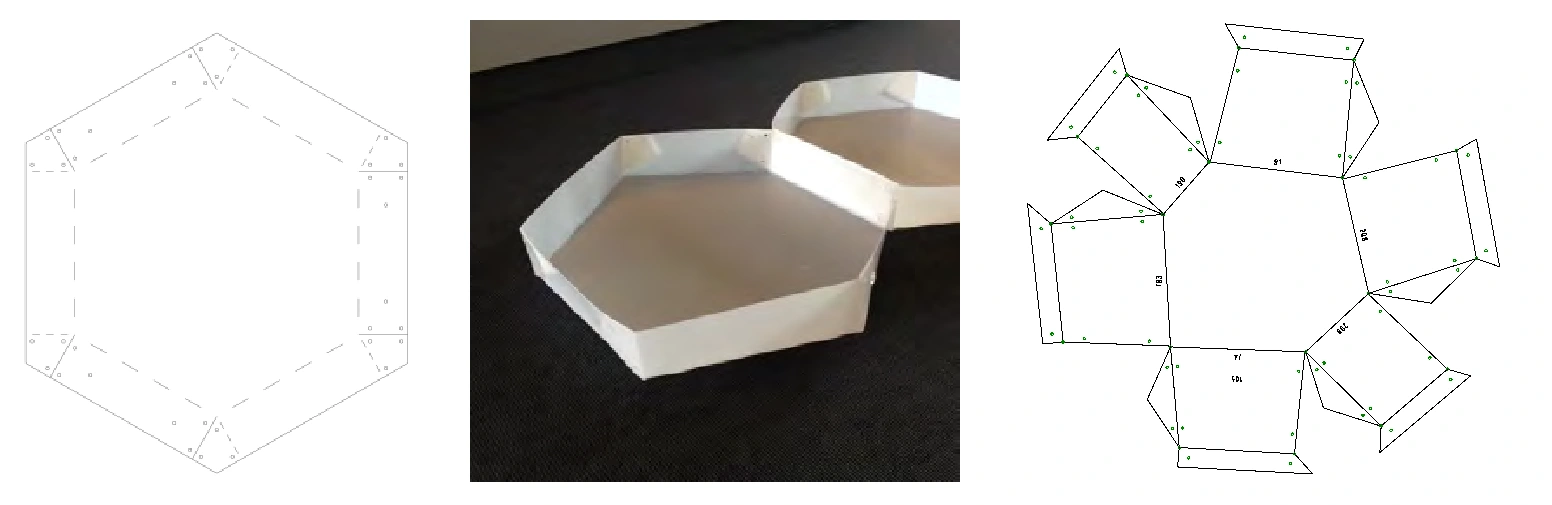
Paper figure showing a flat hexagonal cutting pattern, folded box, and unfolded panel.
A cutting pattern becomes a stiff folded box. IASS 2015 paper.
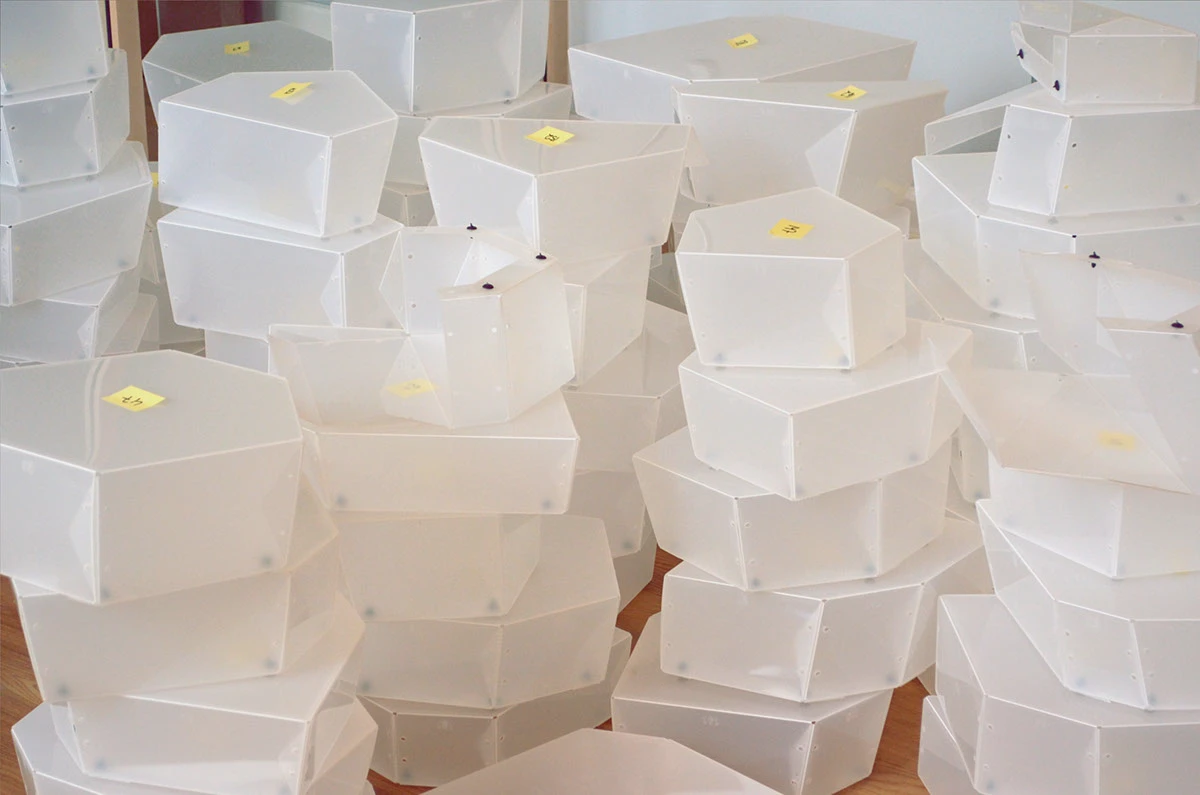
Stacks of folded and numbered polypropylene modules before assembly.
Folded modules ready to be joined.
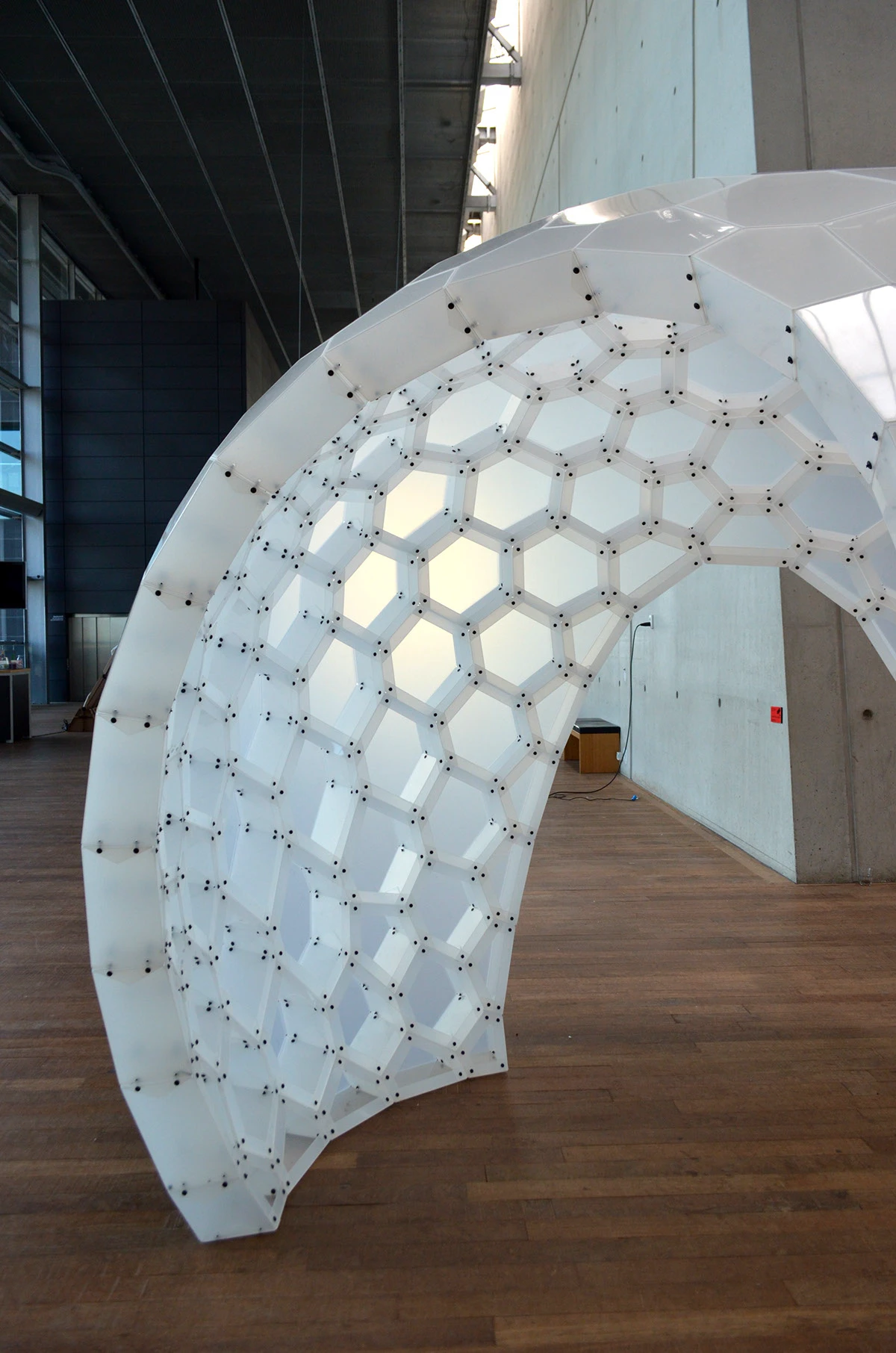
Detail of the assembled PolyShell pavilion and its translucent inner surface.
Connected modules form a rigid, translucent shell.
Visitors exploring the PolyShell pavilion at the IASS exhibition.
Visitors explore PolyShell at IASS 2015 in Amsterdam.
A person standing beneath PolyShell, showing the pavilion's scale.
The finished pavilion at human scale.
Overhead view of the curved PolyShell pavilion.
The pavilion's curved form, seen from above.
Five diagrams showing the curved surface becoming a planar hexagonal mesh.
The digital surface becomes a pattern of flat panels. IASS 2015 paper.
Paper figure showing a flat hexagonal cutting pattern, folded box, and unfolded panel.
A cutting pattern becomes a stiff folded box. IASS 2015 paper.
Hands folding a scored polypropylene sheet during fabrication.
Scored sheets fold into the designed panel shape.
Stacks of folded and numbered polypropylene modules before assembly.
Folded modules ready to be joined.
Close-up of plastic rivets being fitted to PolyShell modules.
Simple plastic rivets connect the modules.
Detail of the assembled PolyShell pavilion and its translucent inner surface.
Connected modules form a rigid, translucent shell.