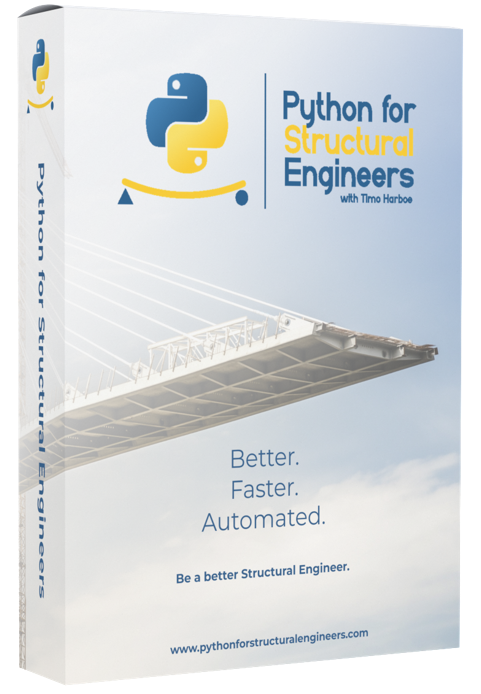
Online course teaching structural engineers how to automate everyday engineering work with Python.
2024-present
Overview
Challenge
Structural engineers spend too much time on repetitive spreadsheet work, manual FEA result processing, and slow design iterations, but most programming courses are too generic to translate directly into engineering practice.
What We Built
We built a practical self-paced course with short edited videos, interactive notebooks, quizzes, exercises, and structural engineering examples that teach engineers how to automate real project workflows from the first modules.
The Work
The Product
Python for Structural Engineers is an online course for engineers who want to automate everyday project work without first becoming software developers. The course focuses on practical tasks: engineering calculations, professional plots, Excel and pandas workflows, finite element model editing through text files, and post-processing of analysis results.
The course is self-paced and designed for busy professionals. It starts from Python fundamentals and moves quickly into examples structural engineers can recognize from real work.
The Course
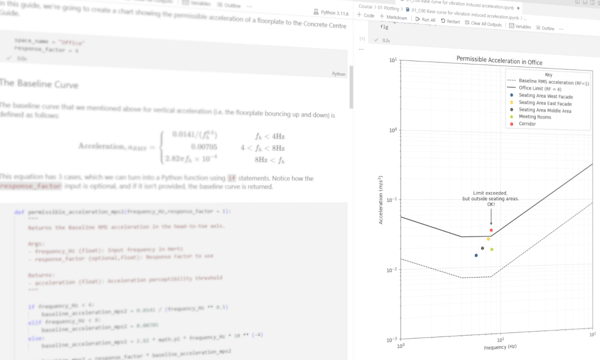
We built the course around short edited videos, interactive code notebooks, quizzes, exercises, and reusable examples. The aim is to make automation feel close to normal engineering work: inspect data, write a clear script, produce a plot, check the result, and reuse the method on the next project.
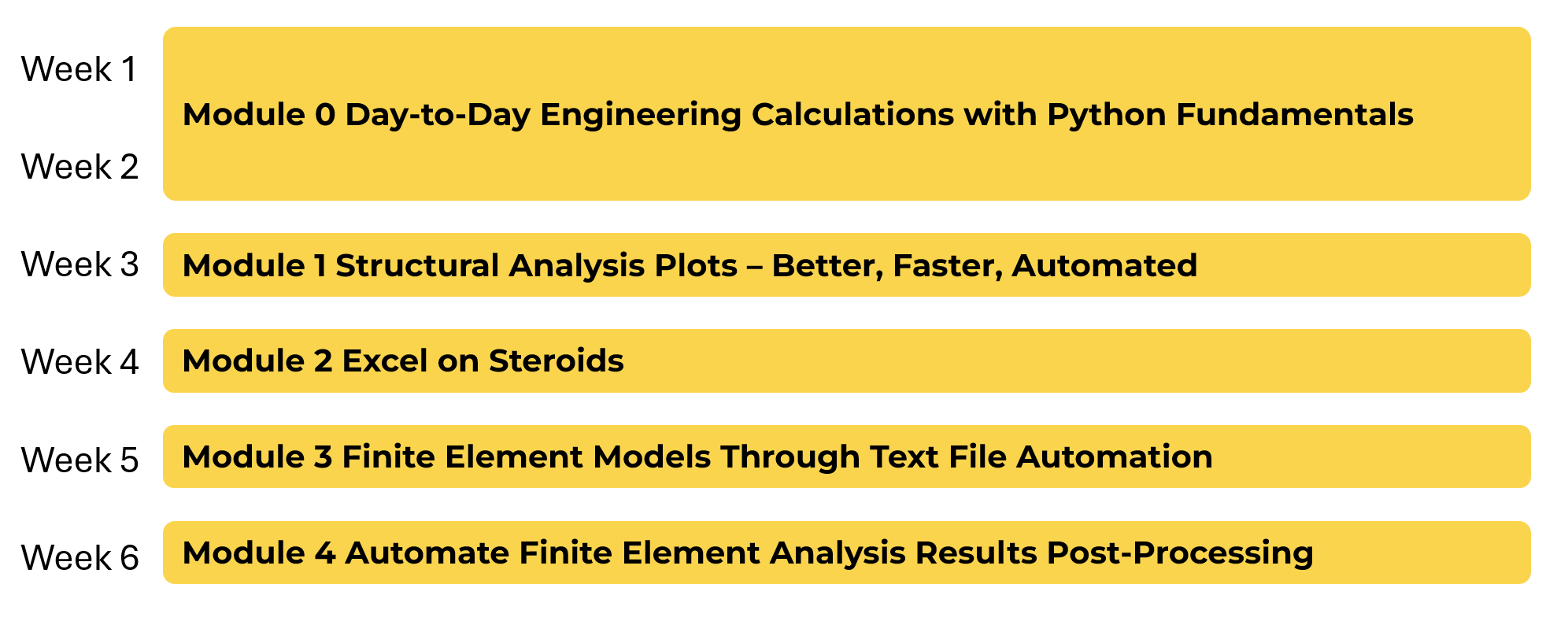
The curriculum covers Python fundamentals, matplotlib, pandas, Excel workflows, text-file automation for finite element models, and FEA result post-processing. The course was developed with e-learning support so the lessons stay structured and applicable from the first module.
Results
600+ professionals learning with the course.
100+ short professionally edited videos.
Interactive notebooks, quizzes, and exercises built around structural engineering examples.
This should be a fundamental course for structural engineers.
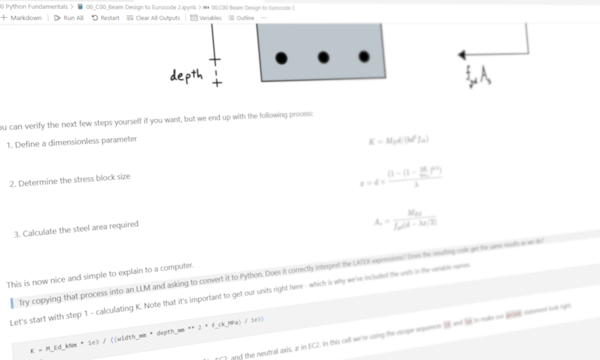
The curriculum is structured around daily engineering workflows rather than generic programming topics.Interactive notebooks let engineers practice calculations directly while following the lessons.
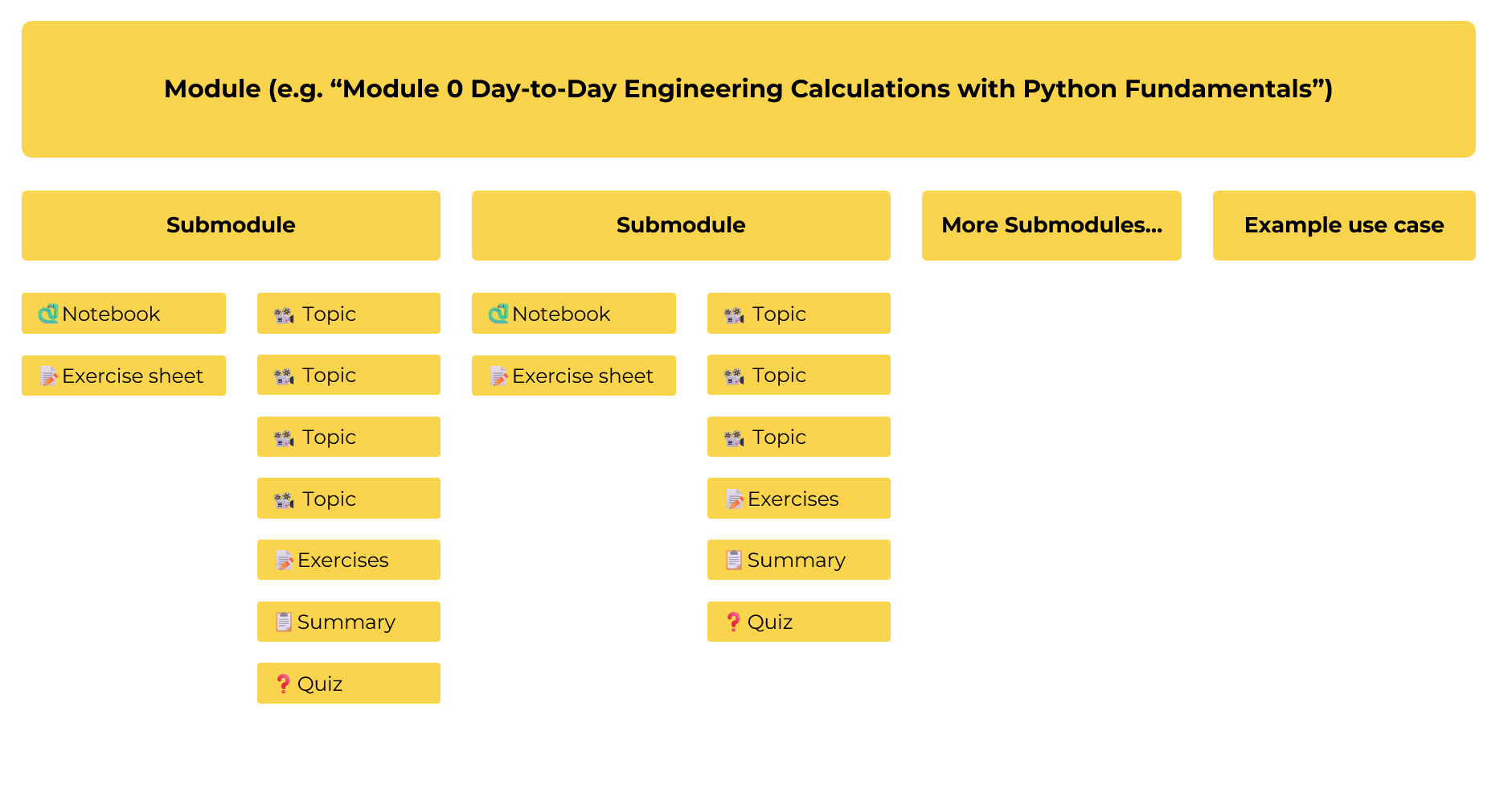
Each module combines short lessons, notebooks, exercises, summaries, quizzes, and practical use cases.Engineering examples include plotting, data handling, and analysis-result communication.
The curriculum is structured around daily engineering workflows rather than generic programming topics.Each module combines short lessons, notebooks, exercises, summaries, quizzes, and practical use cases.Interactive notebooks let engineers practice calculations directly while following the lessons.Engineering examples include plotting, data handling, and analysis-result communication.